
Fada estimates that global supply chain headwinds like scarce availability of rare earth elements for electric vehicle components and geopolitical tensions may affect urban consumer sentiment in June as well.

Goods and services tax (GST) collections from mobile device companies, amounting to Rs 1.82 trillion between 2020-21 (FY21) and 2023-24 (FY24), have already generated more than five times the revenue for the government compared to the Rs 34,149 crore allocated under the production-linked incentive (PLI) scheme for mobile devices over six years ending 2025-26 (FY26). Currently, the GST on mobile devices stands at 18 per cent.

Experts say while the increasing demand for a ban on Chinese goods might make for good optics, the reality is that India is still heavily dependent on that country in a wide range of industries like electronics, mobile devices, auto, pharma, telecom equipment, and fertilisers.
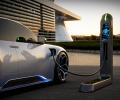
With a million-odd electric vehicles (EVs) - two-wheelers, e-rickshaws, buses and passenger cars - expected to hit the road this calendar year, the shift from gasoline-powered vehicles has become irreversible. Now the question is whether the supply chain is ready for this shift. Key components - the high-powered lithium-ion battery and the cells which go with it, the electric motor, and the electronics powered by chips - account for nearly 60 per cent of the cost of an EV.

Industry leaders on Thursday mourned the death of Ratan Tata saying with his demise India has lost a visionary who shaped its industrial and philanthropic landscape. Tata was a truly remarkable business leader who placed the country before business interests, and whose vision was truly transformational for a country and its people, TVS Motor Co Chairman Emeritus Venu Srinivasan said in a statement. "Mr Tata was a truly remarkable business leader, the likes of whom nations get only once in a century," he added.
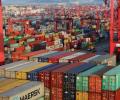
Exporters on Thursday sought a fund of Rs 750 crore for three years to tap USD 25 billion export potential in the US, aiming to seize potential opportunities that may arise as the US President-elect, Donald Trump, has threatened to impose high tariffs on Chinese goods. In its pre-Budget meeting with the finance ministry, Federation of Indian Export Organisations (FIEO) President Ashwani Kumar has also demanded extension of the five per cent Interest Equalisation Scheme (IES).

The Centre on Wednesday scrapped the mandatory human safety tests for electric vehicle (EV) batteries required to qualify for incentives under various government schemes. The ministry of heavy industries, in its fresh guidelines, has made compliance with the ministry of road transport and highways (MoRTH's) prevailing EV battery testing standards the only requirement to get incentives under the Centre's various incentive schemes.

Apart from a pavilion of vintage cars, there will be a Bollywood corner

India can become the number one automotive manufacturing hub in the world within five years, but auto companies need to enhance safety features to reduce deaths due to road accidents, Union Minister Nitin Gadkari said on Thursday. In his inaugural address at the Auto Expo 2023 here, the minister for road transport and highways asserted that the government's target is to reduce these accidents by 50 per cent before the end of 2024 while asking the auto industry to take suo moto action for road safety as the government doesn't want to make anything mandatory. Gadkari's sentiments were also echoed by Minister of Heavy Industries Mahendra Nath Pandey, who lamented that while India has only 1 per cent of the total overall vehicles, the country accounts for 11 per cent of the total global deaths due to road accidents.

The government's ambitious vision document that aims at achieving electronics manufacturing with a value of $300 billion by FY26 (including exports of $105-130 billion) could end up far lower than the target, according to a reality check this month. The reality check came from the Indian Cellular and Electronics Association (ICEA), which partnered with the government in preparing the document. The members of the ICEA are mobile and electronics companies, and its assessment, based on current trends, indicates that the total electronics production in FY26 will be around $225 billion.

'Right now, we are increasing production in anticipation of the demand during the festive season.' 'If the demand doesn't come back, all the production will languish in the factories.'
At Prestige Polygon Towers in Chennai's Teynampet, hectic preparations are on for a mega global investors' meet under the aegis of Guidance Tamil Nadu (the state investment promotion agency) scheduled for January 2024. Asked about the key focus areas of the meet, the agency's managing director and chief executive officer, V Vishnu, said the state was betting big on electric mobility. This is no surprise, given that the state has signed electric vehicle (EV)-related memorandums of understanding (MoUs) with several companies in the recent past that may bring in investments worth around Rs 33,000 crore with the potential to create over 43,000 job opportunities.

The traffic tells a story. During the lockdown, it took 45 minutes to zip through the deserted 35-km stretch from Chennai to reach the automobile heart of Sriperumbudur-Oragadam, where the big names of the car industry - Hyundai Motor India, Renault-Nissan India, Daimler India Commercial Vehicles, Apollo Tyres, and Royal Enfield - are based.
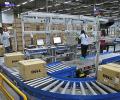
'We have the geographic advantage, demographic advantage, we have the necessary technical skills.' 'We just have to get all of these together. Then, we can very well compete.'

Despite the robust growth in this country, Apple's India share in its overall global sales remained modest -- constituting 1.5 per cent of its overall turnover of $389 billion in FY23.
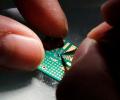
Leading microchip providers Qualcomm and Intel say the chip shortage might last anything between four months to a year, perhaps even two years, depending on the various product categories - mobile devices, ICE, electric vehicles, appliances, data centres. Prakash Mallya, MD, Intel India and vice president, sales and marketing and communications group, said the spike in demand was huge, and cut across segments from PCs, phones, appliances and auto leading to the shortage.

Open order books in February breach 700,000; wait period for some models exceed a year.

Apart from around 40 Japanese companies and five global vendors of MG Motor India, many other biggies are eyeing Gujarat for either greenfield opportunities or brownfield expansion.
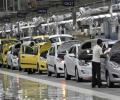
The government on Friday announced several relief measures including deferring one-time registration fee, lifting the ban on purchase of petrol/diesel vehicles by its departments and allowing higher depreciation, but it remained non-committal on the demand for a reduction in GST rates.

One can see the scale of recalls going up as the market expands.

Sanand has catapulted into the big league of automobile industry hubs.

The development comes after a recent notification from the Union home ministry, which has permitted companies to resume manufacturing operations and reopening of shops in red, green and orange zones with certain riders.
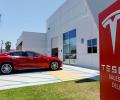
Making it clear that relaxations will not be provided to US-based electric vehicles major Tesla unless it participates in manufacturing activities in India, Union Minister Krishan Pal Gurjar on Tuesday said there cannot be a situation where the market is India but jobs are created in China. The minister of state for heavy industries also told the Lok Sabha during Question Hour that the company is yet to apply for schemes as per the government's policy. Last year, the Elon Musk-led company sought a reduction in import duties on electric vehicles (EVs) in India but the Ministry of Heavy Industries asked the firm to start manufacturing its iconic EVs in the country before any tax concessions can be considered.

The government of Tamil Nadu on Tuesday signed a memorandum of understanding (MoUs) with 35 companies that may see investment to the tune of Rs 17,141 crore, creating employment opportunities for 55,054 people. The major companies that would be coming up with fresh investments over Rs 1,000 crore in the state include JSW Renew Energy Two, TCS, ZF Wabco and Srivaru Motors among others. JSW Renew Energy Two will be coming up with a 450 megawatt (Mw) wind power generation unit at Tuticorin, Tirunelveli, Dindigul and Tiruppur for Rs 3,000 crore. TCS will be coming up with its third phase of expansion at SIPCOT IT Park in Siruseri, ZF Wabco with an auto component unit at Kancheepuram for Rs 1,800 crore and a two-wheeler EV unit by Srivaru Motors for Rs 1,000 crore at Coimbatore.

Prime Minister Narendra Modi on Friday said production linked incentive (PLI) scheme, which is aimed at boosting domestic manufacturing and exports, is expected to increase the country's production by $520 billion in the next five years. Addressing a webinar on PLI scheme, organised by Department of Industry and International Trade (DPIIT) and NITI Aayog, through video conference, Modi said the government is continuously carrying out reforms to boost domestic manufacturing. In this year's Budget, about Rs 2 lakh crore was earmarked for the PLI scheme for the next five years and "there is an expectation that the scheme would result in increasing the production by about $520 billion in the next five years", he said. He added that there is also an expectation that the current workforce in the sectors, which will avail the benefits of the PLI scheme, will be doubled and job creation will also increase.

The town houses some 1,500 small and tiny units, of which 75 per cent are engaged in manufacturing components for the automotive industry. The town houses some 1,500 small and tiny units, of which 75 per cent are engaged in manufacturing components for the automotive industry.

Dealer despatches will probably be a good signal of economic turnaround or further deterioration, says Devangshu Datta.
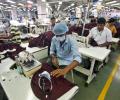
'A change we have seen after the Russia-Ukraine war is the energy crisis in Europe.' 'Earlier, in Europe, people used to change their clothes after 5 washes, now they are using it till 15-20 washes.' 'They used to change their entire wardrobe after 2 months or so, but because of the economic conditions, it has changed.' 'It has affected exports as 40% of our exports is to Europe, 30% to the US and 10% to the UK.' 'The war has to end for better days to come.'

Increasing the duties on auto parts and putting an additional cess on petrol and diesel could drive up costs of vehicles, specially where volumes are low and localisation is not viable.

Will syringe shortage puncture India's Covid vaccine plans?
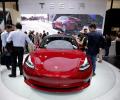

'We are in the reverse gear and we are not there anywhere compared to the rest of the world'

The global semiconductor shortage hit passenger vehicle sales in September, with major manufacturers like Maruti Suzuki, Hyundai and Mahindra & Mahindra reporting a decline in sales on Friday. Kia India and Honda Cars also reported a dip in wholesales last month as compared with the year-ago period. Carmakers like Tata Motors, Toyota Kirloskar Motor, Nissan and Skoda, however, reported an increase in passenger vehicle dispatches last month despite supply chain issues.

Customers won't shift to electric cars until there is countrywide infrastructure for charging stations, which should be as spread out as petrol pumps now. Two, the price of the lithium ion battery, which constitutes 30 to 40 per cent of the cost of an electric car, has to fall substantially, so that the vehicle is as affordable as a gasoline one.


Such allegations are unjustified, given that the CCI's remedies do not promote a free-for-all scheme.

However, a prolonged and intense second wave that curtails oxygen supply to industries for a longer-than-expected period will exacerbate downside risk in affected sectors
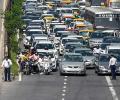
The lockdown in Maharashtra will have a catastrophic impact on April sales, as dealers will not be able to realise the potential of festivities like Ugadi, Gudi Padwa, Baisakhi and Poila Boishakh.

Indian plants -- who plan to begin production with 28 nano metre chips -- will take two to four years to get off the ground. By that time, in the fast changing world of chip making, the global market would have shifted to 22 nm.

India Inc has weathered many a storm during Covid-19: from supply chain disruptions to demand dips, steep increase in input costs to shortage of key raw materials. As most companies navigated unprecedented challenges on multiple fronts, realisation dawned also about the criticality of employee welfare in the survival of the business. And it was the human resources (HR) department that faced the greatest test on this front.
